Margaret Koger – Money Comes to Apalachicola Bay

Margaret Koger
Money Comes to Apalachicola Bay

I.

Apalachicola rests beneath misty river-mouth salt air
Here where wharf boards rot and shrimp trawlers rust.

Where ages ago stacks of 500-pound cotton bales waited
To be loaded on sailing ships bound for distant mills.

Where boats filled with mountains of living sponge unloaded
A golden harvest brought up by immigrant divers.

And workers lined up barrels of turpentine pine rosin
Refined in Cracker stills and sold for ship’s caulking and soap.

Where crosscut thousand-year-old cypress logs floated
Downstream to sawmills till there were no old cypress left.

Where roofless buildings now house riots of green upstarts
And leaning walls support wild trumpet vines.

Where oyster-gatherers and shrimpers maybe pull in
Enough to feed a family—weather providing.

Where everybody who lives here knows it won’t last
Property prices skyrocketed so high nobody can . . .

Homes sheltered by Historic District regulations
Victorian mansions, cottages, and brick one-levels

Cost so much these days a person would hardly believe
Two blocks down there’s not even a sidewalk to walk on.

Sweeping Magnolias shade verandas and screen porches.
Empty rockers witness how folks once sat out evenings.

Refined old Gibson Inn still shelters travelers and lazy cats,
Green anole lizards in cycads flash their pink throat fans.

Church bells ring at eight, noon, and pews fill up on Sundays
Episcopal, Baptist, Catholic congregations meeting since 1830 or so.

Apalachicola Library’s got free email for anyone who drops in
Thanks to Bill Gates. Open 10-12 and 2-5 most weekdays.

Here in Apalachicola, fixed-up Cracker-box houses
May sell for a cool half-mil …

At Lafayette Park landing marsh rabbits roam
And young yellow-crowned heron fledge.

Along salt marsh stalks of knotgrass and sugar cane
Yellow-striped lubber grasshoppers cling undisturbed.

Tiny black crabs on the wooden landing skitter and pick
At discarded bait shrimp left by fishermen.

Black skimmer gulls drag wide-open beaks over shallows
Common terns plunge deep as surface water explodes.

Under the Lafayette Park gazebo (honouring our dead)
Guests witness as a bride and groom promise to uphold.

Cicadas ratchet from live oaks as mockingbirds call
And red cardinals flit anxiously from bush to tree.

Collared-doves ca-COO-Kuk in symmetrical tone
Their flush notes steadfastly resonate in the steamy air.

Common cooter turtles a foot long scoot over grass
As a northern flicker feeds its baby in the bird-box.

II.

Stock market climbing, taxes for rich folk falling
Getting ready for a new day on the Forgotten Coast.

Developers eager to buy up the whole Florida Panhandle.
New investors needed for the survival of the one percent.

There’ll be rich newcomers clogging up the Piggly Wiggly
Dribbling bits of money to the minimum-wagers.

Buying up history and habitat so no matter
They drive away exactly what they came for.

Jennifer L. Freed – Golden Door

Jennifer L. Freed
Golden Door

          Send these, the homeless, tempest-tost to me,
          I lift my lamp beside the golden door!

          –Emma Lazarus, ‘The New Colossus’

I.

He says They
keep coming
to reap
the bounty
We
have sown.

He says Save
what we have
for our
own.
 
II.

Fridays at the Free Library,
I steer you through the language
that surrounds you here
in your new
home.
You left
your bamboo hills, your missing father, soldiers
cleansing the land
of your people.
You work
nights, emptying crates, filling
big-box stores. You share
three rooms
and minimum wage
with mother, sister, her two boys,
your little girl.
Now you urge me to take
the curry noodles you brought on a foil-covered plate,
the golden dumplings your wife fried specially
to give
to me.

George Franklin – Heads and Tails

George Franklin
Heads and Tails

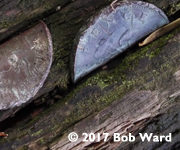
Passed from hand to hand, everyone’s
Fingers touching them, rubbing the
Edges, the milled ridges that scrape
Against a blunt thumb, cold at first,

Then warming in your palm’s center or
A pocket next to your thigh, coins
Are a promiscuous species. Some are
Older and more experienced. The effigy

Has softened, grown almost smooth, the
Legend barely discernable. Now, it’s
Just a silver disc with a story, tarnished
By all the skin that’s squeezed it, that’s

Hesitated before letting it go for some
Better thing, a bag of white rolls, a
Newspaper, a glass of red wine. Then,
There are the new ones, fresh from the

Teller’s window at the bank, the obverse
Proudly refusing to look back at you—no
Kissing on the lips—the reverse declaring
Without equivocation some piety in Latin,

Decorated with a wreath, each leaf
Sharp, pointed. How innocent they are,
Still smelling of the mint, untouched
By sweat and dirt, but already eager to be

Bartered, a tip for the server, a phone call,
A piece of chocolate. Maybe this one will be
Dropped in a moment of thoughtlessness or
Confusion and picked up from the sidewalk by

A student on his way to class, who’ll look
Closely at its scratches, its obscure symbols,
And then spend it quickly before he can
Change his mind.

Pattie Flint – Rice Cats

Pattie Flint
Rice Cats

The woman who cannot stand up
feeds rice to the cats that are missing ears and toes
and I think about how wasteful my life is
as I stuff souvenir saris into my backpack

The starving cats will eat the rice and be thankful.
They will puke it up and lap at the mess,
their ribs heaving as they purr like turbines,
while the woman with a back curled like a dry leaf
watches them passively and clicks her tongue.

I will grow up to feed lost things.
I will grow up beyond my need for nail polish and candled restaurants.
Bend me over.
I am tired of looking up.

Mark Danowsky – Market Waste

Mark Danowsky
Market Waste

Clerks pass by my sampling station

One wheels a grey trashcan filled to the brim
with cherry tomatoes

Another grey can holds scooped cantaloupe rinds
weighed down with leafy greens

My father couldn’t do this job; he’d get himself fired
for asking too many questions, expressing his horror

No one complains

If asked ‘How’s it going?’ there are two answers:
‘It’s going’ & ‘Living the dream’

The only mask you have to wear is the one they pay you to

Peter Neil Carroll – American Dream

Peter Neil Carroll
American Dream

Shouldering window glass, unlit
cigarette in his lips,
a youth enters a side street,
Minsk, 1904.

The aproned shop girl Mata
watches him pass. He doesn’t know
yet but in time he’ll become
my grandpa, married to Mata at 18.

Minsk, another stop on his road.
The itinerant glazier stays, he says,
for Mata’s cooking and the revolution.
Amid conspiracy, Cossacks shoot
into a secret meeting. Nearly killed,
he leaves for America.

Poor then and ever after,
stealing ship’s food, he arrives
in New York, marvels at insatiable skyscrapers,
their greed for glass. His trade lives
in his hands, splits from splinters,
bones shattered by faulty ladders.

What he finds in America he told
ever after, a recurring dream—awakening
inside a vault filled with pennies—stuffing
his pockets—entering another room piled
with nickels—leaving behind pennies,
taking nickels, then with dimes in the next room,
reaching quarters, dumping again, re-filling

then, he says, I woke up with empty pockets.

Carrie Callaghan – The Mercenary

Carrie Callaghan
The Mercenary

 
Spring, 1631

A carriage raced down the humpbacked bridge over the Singel canal, across the quay, and then it turned sharply toward him. Abraham hopped out of the way, but not fast enough. The corner of the wooden cab smashed into his shoulder, sending him sprawling across the quay, where feet skittered away to make room. The paving stones hit his mouth like a hammer.

He lay, facedown in the mud, and tasted his blood. Around him, voices cooed and clucked, but no one stopped to help. He fought back tears, then pushed his aching young body up to a seated position. He probed his tongue against the bloody mess inside his cheek.

He had lost no teeth, it seemed, but that was a small mercy. Mud clung to his face and clothes, and now he would look like a vagrant when he met with “Johann.” Abraham had arrived in Amsterdam two days ago, after escaping from Haarlem buried in the back of a farmer’s wagon and on the condition that he meet with this recruiter. And now he was late, according to the church bells. The small advance, just a few stuivers, the Haarlem man had given him was already gone, claimed by the hag who ran the boardinghouse. Tomorrow night Abraham would be sleeping in the alley, unless Johann could help him.

He stood and tried to wipe the cold mud from his tunic, while avoiding eye contact with any of the people walking busily around him. Knots of people flowed past, more than even the prosperous Haarlem could gather in the main square. A woman with a fur-trimmed black bodice and starched white collar stepped around him, followed by a serving woman in a coarse brown linen skirt. Alongside one of the tall brick buildings with the fashionable tapered frontage pointing toward the sky, a boy Abraham’s age juggled four cloth balls and a potato between fingers pink with cold. An old man with a knit cap and a heap of patchwork tunics layered over his shivering hands wobbled by on a stick. He handed Abraham a rag.

‘Pennings, pennings,’ he whispered, his voice hoarse.

Abraham had already run the rag down his face, and he hurried to give it back.

‘I’m sorry, old man. I’ve got nothing.’

Abraham rushed to walk away, though a throbbing in his left hip put a hitch in his step. His heart pinched. If he were injured, or broken, Johann might not sign him as a soldier. And then he’d be begging himself.

No, he’d accept anything by that fate. Ten years ago, his parents had fled Haarlem because their bankruptcy soiled every social connection they had, and now Abraham followed in their footsteps. Except he fled his home because he had been—almost—caught stealing.

It had been wrong of him to try to steal from the silversmith, and foolish to think the man wouldn’t recognize him. No matter. Here he would make amends. He wouldn’t become his cursed, heartless parents.

He found the inn, judging by the painting of a green hare outside, and inside he was the only man in the common room. He shifted his weight back and forth on his cold feet, and hoped the mud was hard to see on the brown of his outermost tunic. Perhaps Johann had already left. The inn had clean-swept floors and a few windows in the front that looked out over the canal, and was tidier than any tavern he had been to yet in this city. Abraham hesitated, conscious of his filth, and then asked the tavern keeper if anyone had earlier been waiting. The man shook his head. After a moment, Abraham sat at a table. He waited, and then, with his stomach gaping with hunger, ordered some bread and cheese. He didn’t have a single coin.

A tall man with a reddened complexion and a short, blond beard entered the main room. He walked up to Abraham’s table.

‘You’re Abraham?’ he asked.

‘That’s right.’ Abraham placed his hands in his lap, and his palms left a hint of anxious moisture on the wooden table. ‘You’re Johann?’

The other man didn’t answer, but he didn’t disagree either. He pulled up a high-backed chair, and the serving woman took his order. He had a slight accent, German possibly.

‘Let’s keep this brief,’ Johann said. He nodded his thanks when his tankard of beer arrived. “We need men. The pay’s good, conditions are good. I can’t say much now about location, but you know where the war is.”

Abraham nodded, though in truth he had only a vague idea of where the fighting was taking place. Somewhere south, or perhaps west, of here. He was seventeen, and he’d had little schooling. But he didn’t care.

‘I’m fine with all that. I want to fight and earn … my place at home again,’ he said, and then flushed at the intensity of his confession. He hoped Johann wouldn’t ask him to stand up, or worse, run. He’d certainly have a limp. ‘Is there some sort of equipment I get?’

Something like a smile swam over Johann’s face, and Abraham noticed a light scar running down the man’s left cheek, hidden under his faint beard. Abraham tore off a chunk of bread and stuffed it into his mouth.

‘You’ll sort out the equipment when you join your unit. Our responsibility is to get you there. I’ve got a few boys headed to the fight, leaving tomorrow. You ready to join them?’

‘No doubts here.’ Abraham swallowed a large mouthful of beer.

‘Just give us a signature.’ He pulled out a parcel and extracted a sheet of paper covered in writing. Abraham frowned, slowly picking his way through the first few sentences, before he gave up and signed. It was idiotic, but he didn’t care. He needed a way out. Besides, in addition to clearing his name, he’d be contributing to Holland’s freedom, fighting to keep the Spanish King and his allies away from the United Provinces. That would be worth telling his family back in Haarlem—if he ever saw them again.

As Abraham had hoped, Johann settled the bill with the tavern keeper. Abraham’s belly was full, but when Johann glanced away, he stuffed the rest of the cheese under his tunic. There was no sense in throwing it out.

‘Be at the southern gate just after sunrise tomorrow,’ Johann said. ‘Sober, if you care about your comfort.’

Abraham suppressed a bitter smile. He had no coins for drinking. ‘And who do I look for?’

‘Myself. You’d better be there, or I’ll find you and make sure you pay up at that inn you’re sleeping at. The lady keeps a close watch on her bills, and I’ll take care of it if you’re with us. But it’s on you if you’re not. To be paid in blood, if I know Margrieth.’

‘I’ll be there.’ Abraham glanced down at his waist, wondering how much the lump of cheese would protrude when he stood, and when he looked up, Johann was walking out the tavern’s door.

Abraham followed quickly, just in case the innkeeper decided to try to charge him for the warmth of the fireplace or his time under the dry roof. His hip hurt as he walked. Outside, a grey rain fell, and Abraham pulled his floppy-brimmed hat down over his forehead and yanked his collar up. No fine lace for him. But he’d settle for anything warm and dry, and to hell with fancy.

A boy carrying four bundled packages ran into him, cursed, and scurried along, head bowed under the rain. Abraham could follow him, see what else there was to do in this city beyond affix his signature to documents he couldn’t understand. Instead, he stepped to the side, under the dry protection of an eave, and watched. He blinked back tears. What a fool he was.

‘Pennings, a penning,’ a hoarse voice mumbled next to him. Abraham looked over to see the same old beggar from earlier. A wooden knife hung from the man’s loose belt.

‘Sorry old man,’ Abraham said, and turned back toward the crowd. The man fell silent, but didn’t move away, though Abraham wished he would. Abraham was a soldier now; he should keep honourable company. He should have asked Johann what weapon he would be using. Just how would he have to kill another man? Children splashed and laughed, while a woman in a clean white cap frowned at the water sneaking down the back of her neck.

‘It is like no other,’ the man next to him said. Abraham started and turned to look at him. The man’s brown hands trembled as he rubbed his shoulders for warmth.

‘The rain?’

The man gave him a half smile. ‘The city, boy. This city.’

Abraham nodded, not willing to reveal his ignorance of Amsterdam.

‘I love it still, you know. These streets, these tall houses. See those cranes there?’ He pointed across the canal, above the roofline. ‘Building new houses. When I was strong, I could do that work. I built some of these houses.’

‘Then why doesn’t your Guild care for you now?’ Abraham looked away as soon as the question came out. He hadn’t meant to be rude.

‘Ah, boy. They’ve forgotten me. It’s been too long. No one knows anyone here, not anymore. Sometimes that’s good—’ He smiled and cupped his hand under his hanging pocket, which gave the tinkle of a few coins. ‘When there’s no shame to be had in asking the new masters for a penning. And no one to blame me for what I’ve become. Sometimes there’s pain … But I love it here.’

He straightened his tunics, tightened his grip over the cane, and took a shuffling step out from under the eave. The rain, Abraham realized, had lessened.

‘Wait,’ he said. He pulled the cheese from inside his tunic. “Here.”

The man pressed his lips together, looked at Abraham, and then took the cheese.

‘Just half,’ he said, broke it, and handed a piece back. ‘My thanks.’

Before the rain could resume, Abraham loped on his aching hip back to the boarding house, where fleas hopped from the rag over his pallet, and a leak in the roof dripped water down the nearest wall. He kicked the straw bundle that passed for a bed and cursed his parents’ names. If they hadn’t left him poor, maybe he would have turned out better. He kicked it again, ignoring the pain in his hip and the skittering laugh of another boarder behind him, and sat down. Abraham spent the rest of the night eating the cheese, bit by bit, and waiting for dawn. His last night without a weapon in his hands.
 

#

 
Abraham woke in the dark, not realizing he had slept. He made his way outside the quiet city before dawn, and nine other men waited at the gate, marked out by their shabby clothing and downcast eyes. He hugged his arms against himself and tried to ignore the growing sound of his pulse in his ears. His hip didn’t hurt anymore, at least there was that to be grateful for. Young bodies healed quickly. Two of the men traded bawdy jokes and laughed loudly in the tender morning, but the rest of them scuffed their boots against the ground and waited. Johann arrived wearing a large floppy-brimmed hat and ticked their names off a list.

‘Pieter van Sloot? No Pieter? Damn the son of a whore.’ He made a note on his list and handed it to a filthy boy, who ran off. ‘The rest of you, climb up.’ He pointed at a large wagon hitched to two morose horses, which he had driven up from somewhere inside the waking city.

‘An open wagon?’ Abraham said.

‘Oh, you’ve got standards, do you? In that case, I’ll have my money back, if you please, and you can hire a private stagecoach for yourself.’

‘No, it’s not that, just … it’s nothing.’

Johann nodded. Abraham watched the other men climb into the wagon, some with the limber ease of farm boys, others with clumsy effort.

Finally, Abraham was the last one standing in the mud.

‘Go on,’ Johann said, and waved his arm. He was already looking toward the driver.

Abraham walked over to Johann, who blinked and raised an eyebrow when he saw the boy approach.

‘I’m not going to go,’ Abraham said. ‘But I want to pay back what I owe you.’

‘Christ’s blood,’ Johann swore. He took his hat off and ran his fingers along the lining before putting it back on his head. Then he looked at the ground, turned away from Abraham, and swung back toward him with his right fist.

The punch smashed Abraham in the left temple, and he stumbled and fell.

‘I’m still not going,’ he managed to say.

Johann muttered something inaudible, then yelled out for the driver to carry on. As the wagon started rolling, he kicked Abraham in the ribs.

‘I—’ Abraham tried to say.

‘You son of a whore,’ Johann said. ‘Make me look weak in front of the other men. Couldn’t you just not show up so I could send someone to cut your ear off, like the other bastards?’

Abraham rolled onto one hip and clutched his pulsing rib.

‘Please don’t cut my ear off. I want to pay the money back.’

‘That right? You got a handful of guilders in your pocket? I didn’t think so, you filthy louse. Get up.’

Abraham stood, and Johann examined him. Then he grabbed Abraham’s shoulder, pulled him low, and kneed him in the gut.

‘No one’s ever shown up and asked to back out,’ he said as Abraham coughed. A pair of peasant women walked past them, clucking in amusement while they held their produce baskets tightly.

‘Let me make it up,’ Abraham said, forcing the words out. It had been years since he’d had a beating like this, not since he snuck away from lessons to run around with Bartol and the other boys.

Johann clenched his jaw. ‘Follow me. Don’t talk to me while I’m walking, I need to think.’

They walked back through the tall stone gate and into the city. The cobblestone streets were filling with workmen hauling carts of bricks and bakers piling fresh loaves into their open display windows. Abraham’s stomach rumbled.

‘You’ll work?’ Johann stopped and grabbed Abraham’s shoulder.

‘Absolutely. I can’t read much, but I can run and lift and sweep—’

‘You’re a fool, boy.’

Abraham shrugged. ‘But you won’t cut my ear off.’

Johann spat at the cobblestones and then turned and walked away. He turned, raised an eyebrow, and gestured for Abraham to follow. AQ

Bryan R. Monte – AQ21 Spring 2018 Book Reviews

Bryan R. Monte
AQ21 Spring 2018 Book Reviews

Jacob M. Appel. Millard Salter’s Last Day. Gallery Books, ISBN 978-1-5072-0408-5, 245 pages.
Arthur Allen. Here birds are. Green Bottle Press, ISBN 978-1-910804-09-4, 27 pages.
Alida Woods. Disturbing Borders. Finishing Line Press, ISBN 978-1-63534-405-9, 29 pages.

It is my privilege, as a reviewer and editor of poetry and fiction, to regularly make the acquaintance of many writers in the early stages of their careers. It is this discovery of new or not-so-completely-established writers that makes the hundreds of hours I put into Amsterdam Quarterly worthwhile. The three writers above (all former AQ contributors which makes me doubly proud, of course) have all, within the last few months, published beautiful, noteworthy books which I’d like to bring to the attention of AQ’s readers.

The first writer, Jacob M. Appel, is now, no longer a stranger to the publishing world. When I first met him almost coincidentally in New York City, in 2014, he had already published a few books, which had won some major awards. In the summer of 2014, I received an email from Appel asking if I’d like to review his books. Unknown to him, I was in Manhattan at that very moment to meet digital artist, Yolanda V. Fundora, (who would later contribute work for three AQ issues and two yearbook covers). As we met at the hotel’s street front café, I saw a young, (approximately twenty-years younger than I am), man wearing a name badge for a New York hospital. He stopped to give me three of his books: a novel, The Biology of Luck, an essay collection, Phoning Home and a short story collection, Scouting for the Reaper. I found him to be intelligent and articulate and I hoped the books he left for review would be the same.

And they were. Since then, Appel’s work has never ceased to surprise and delight me. His fiction, as I have remarked in past issues, reveals the work of a master storyteller. He grabs his audience on the first page and doesn’t let go of them until his intricately constructed plotting mousetrap artfully closes upon its victim on the last page. Millard Salter’s Last Day, is a perfect example of Appel’s fictive technique. It is about the life of a Jewish, New York doctor, a psychiatrist, who on the first page, expresses his desire to kill himself by the end of that day. This is due to the grief he has experienced after the loss of a second wife, whom he dearly loved, and a patient with whom he had a close relationship.

However, almost everything that Salter experiences that day seems to pull him back into the land of the living: a colleague at work, whom he hates, tells him she wants his position at the hospital when he retires. Salter’s first wife reveals that she doesn’t hate him for divorcing her because she was also having an affair and she makes a pass at him. So does a former schoolmate who is in town for more than one (she hopes) reunion. Later the same day, Salter’s luncheon conversation with his son, who, in his forties, has not make a life for himself, is interrupted by a gas explosion across the street which they both survive unscathed (except for a few scorch marks on Salter’s suit), but which seriously wounds the hospital administrator who just minutes before badgered Salter for an overdue report. Even a surprise 75th birthday party at his home, including friends and family, off foot him. Through all these events however, Salter continues his ‘Do I or don’t I’ meditation right to the very end. In the meantime, the reader gets a window into the current state of high-end medical and especially psychiatric care in America, ruled over not by doctors, but by hospital administrators. It is a world that is vividly rendered, where Appel adds one plot complication upon another until the novel’s very last scene. (Please, don’t read ahead, though, or you’ll ruin the ending for yourself).

The way I met the next writer, the poet Arthur Allen, is also fairly coincidental. Six or seven times a year I receive requests from university students enquiring about internships at Amsterdam Quarterly. Unfortunately, I must disappoint these young people with the news that AQ is not a business but rather therapeutic hobby for a disabled older man with multiple sclerosis. One of these students was Arthur Allen. I read through his résumé and wrote him: ‘Unfortunately, I don’t have an internship to offer you, but looking at your CV, I’ll bet you’ve got a few poems for me.’

And he did. He sent two poems, ‘On my father’ and ‘Unresolved harmonies,’ which I immediately knew I wanted to publish in AQ16’s issue on Interiors, Gardens, Landscapes and Music. When he attended the AQ 2016 Yearbook launch party, he read his poems from a journal in a hand with very few strikethroughs or other revisions. If I’ve ever met a natural-born poet, it’s certainly this young man. His chapbook, Here birds are is an excellent exploration of grief and intimacy related to the sudden death of one’s father caused by a hit and run driver. From the very beginning it addresses this grief through a description of how the father was found, ‘on his side, limbs like crushed cowslip flowers / tangled in the bicycle frame,’ to his mother’s unspoken grief witnessed when he was child: ‘She was siting gently / sinking without / sinking.’ In ‘The First Night,’ the poet asks: ‘the cosmos … “Why me?” … and it barely suffers to reply “Why not?”’

Allen continues to look for answers among the birds in the British countryside. In ‘Augury,’ he imagines his father’s body during autopsy as that of a bird’s: ‘gone / in wind, in perdu, insignificantly battered’ how the pathologists ‘opened and pinned a pair of wings… to relieve rigor mortis’ The poet’s loss of his father is further mentioned in the extended avian metaphor because ‘I do not know “the portent of the pitch / or direction of song,’ but the poet does know: ‘… it does not look like a man / asleep.’ ‘Poem after the manner of simple hearts’ describes the funeral and the mother and child visiting her husband’s/his father’s grave ‘The sky is bloody and violent.’ Allen’s thematic and imagistic concern with birds and bird metaphors in Here are birds is revealed halfway through the chapbook in its title poem’s epigram. Here Allen defines augury as “Interpreting the will of the gods by studying the patterns of birds, both from their flight, alites and their voice, oscines.” There is also the poet’s belief that ‘… Nature / cures Nature,’ in the next poem, father and his attempt to recover him, if not physically, then in his thoughts. In “Serenade” what Wallace Stevens, Schopenhauer and Mark Twain said all fail to comfort the poet who remarks: ‘What do they know anyway.’

The four-part poem, ‘From Amsterdam,’ towards the chapbook’s end, continues this conversation, but in a setting more familiar to AQ’s Dutch-resident readers and without the previous avian imagery. It also reveals some negative elements of the speaker’s relationship with his father. This poem begins with a letter addressed to G. with various dates which, in its first section, describes a night with friends in the Vondelpark in which he uses an extended arachnidan metaphor: ‘we hung in the / nets, strung out and dozing and everyone changing the / sound of my name in their mouths.’ In section I., the poet returns to the theme of his lost father, and his father’s perception of him as a ‘lazy’ because his ‘drawing in the sand with a stick’ wasn’t enough for his father. Now, writing in the Vondelpark his ‘notebook has become a sign of occupancy.’ In section II, even looking at ‘Picasso’s fish’ sculpture reminds him of his father’s absence. In the third section, a somewhat weaker section of this series, the poet describes ‘hot pancakes wrapped in his hand,’ which he wanted to ‘skim…into the canal like perfection reflections of the moon.’

The last poem in the collection reveals finally an intergenerational conflict between father and son which has gone on for three generations in which the poet describes ‘Bill,’ his grandfather ‘whose death was a scandal only to himself’ This rich, rhythmical poem with its very original images describes sometimes standard, generational, pendular personality type swings between father, son and grandson. The grandfather, like his grandson, was also called ‘lazy’ because he was a farmer who ‘wouldn’t hoe his corn / and lost to frost the lot he’d sown.’ The poet describes his grandfather as dead before he died ‘Scratched to death by his familiars,’ … grown white … put himself to bed / each night on butcher’s ice,’ … and his ‘coffin-varnished mind.’ These descriptions of his grandfather’s laziness and his preoccupation with death is also reflected in the poet’s own perceptions. It is perhaps a bit unfortunate that the poet didn’t explore his similarity with his grandfather a bit more and also their differences with their father/son. Nonetheless, collectively, these poems are the product of an inventive, intelligent mind trying to grieve, through art, about a parent’s sudden, tragic death and about what separated and connected him to his family whilst they were still alive.

Similarly to book above and all good books of poetry, Alida Woods’ book Disturbing Borders tries to cross the line or bridge the gap between what is said and not said, what is seen and what is only felt, and between life and death, mortality and immortality, through images from landscapes, home interiors and her family. I first became acquainted with Woods’ work at the Blue Flower Winter Writers’ Conference at the Atlantic Center for the Arts in January 2015. She attended a class led by internationally-renowned, multi-award winning poet, Carolyn Forché. During class, Woods read a poem entitled ‘The Clearing.’ I told her about AQ and asked if she would consider submitting the poem for AQ16, whose theme was Interiors, Gardens, Landscapes and Music. She promised she would, but like many promises made at conferences thousands of miles away, I wondered if she would actually send it.

And she did. I paired her poem with a digital image by Yolanda V. Fundora entitled Jockey Hollow #3. Her poem’s placement next to Fundora’s golden clearing received many positive comments from readers. In addition, I got to know Woods a bit more when she visited Amsterdam with her partner in April 2017 and attended AQ’s Writers’ Group. She told me at the time she was working on finishing a book of poems for a publisher. Disturbing Borders is that book.

This chapbook of twenty-seven introspective and meditative poems describes how desert, seacoast, suburban gardens, ageing parents and lost things transport the poet to places ‘beyond maps.’ In the book’s opening poem, ‘Crossing,’ she describes how watching her daughter carry her child reminds her of watching war refugees carry their children. She wonders how they will find ‘a place we called home.’ Then harkening back perhaps to a time early in human history, she writes about the necessity of human cooperation. ‘We will arrive carrying each other / across the river / across some faint line in the sand / or we will not arrive.” The theme of refugees is addressed in the next poem at the end after the speaker has lost a glove and remembers the effects of a flood: “three people downriver … or a boy and his mother crossing some border’.

In ‘Valley of Fire, Utah’ and ‘Folding Lesson’ she mentions the lost civilizations of the Aztec and the Wampanoag and relates them to lost parts of herself from her childhood in the second poem when she goes to visit her mother ‘in a home not is not her home’ or ‘in the village of the elderly’ as the poet refers to it in third poem entitled ‘Eighty seven.’ In ‘Peripheral Vision’ the poet relates her mother’s blindness to her own drive from the mountains into the valley where, because of a storm the poet reports it is ‘darker here and deep green’ and ‘I cannot see’.

In ‘Deadheading Daffodils,’ Woods writes how gardeners ‘create their own geography / careful boundaries drawn, / plots of obedient perennials / resurrecting each year’. In ‘Cartography’ Woods wonders where sleep and the unconscious take us: ‘Where we go at night after night / on this pilotless craft / heading beyond maps—’ Loss in represented in two poems, ‘The House of Forgetting’ and ‘Pigeon River Gorge,’ the first about the memories her mother’s house still holds after her death and the second about the slaughter of an entire species of hundreds of millions, the carrier pigeon, by American immigrants in a little more than a century. ‘In the Drawer’ the poet finds a letter her sister wrote to her ‘two days before she died’ but never sent, among a collection of pencils that have ‘reproduced in the drawer, / Chap Stick and three tubes of sun cream.’ It is a message that in: ‘Buried there’ it reminds her ‘that life is messy and unsharpened’. Framed by the event of an autumn dog walk, ‘The Clearing’ is meditative poem in which the reader can feel and see the dog’s ‘fur ripples in the brittle air / that draws us into this amber afternoon.’ This poem is about more than a dog walk. It contains an epiphany, perhaps with her mother’s and sister’s deaths in mind, when the poet notes ‘The moon lifts her belly up over the trees’ and ‘shadows reappear and ghosts speak softly’. Her mother’s shadow is specifically mentioned in the next poem, ‘In Your Mother’s House,’ in which there were ‘an abundance of things and a scarcity of love’. In the poem’s conclusion, the speaker’s mother’s shadow ‘slid onto / the pages of her / unwritten book’.

‘Dancing in Cassadaga,’ is about a visit to a psychic village that helps define another disturbed border in this collection. The psychic’s home décor and ambiance includes a talking bear ‘warning intruders / that crossing the line may / involve intricate encounters with poetry.’, ‘the smell of patchouli’ and ‘made in India drapery’. The psychic tells the poet about her children’s lives or characteristics in the present, the poet’s past life in Egypt and her advice for the poet’s future. “The Color of Morning” the chapbook’s terminal poem is located in some borderless time and place although it takes place in the poet’s hallway at 4 a.m. Here, the reader cannot be certain at first if the poet is describing an apparition of her mother in the hallway with her daughter, the poet herself, in her arms, or her own daughter with her grandchild. Once again, as in Allen’s collection’s terminal poem, the generations tumble one into other as a family travels through time, past, present and future, trying to find its way. AQ

AQ21 – Money

David Subacchi – Cold War Museum

Cold War Museum
by David Subacchi

An air of disappointment
Haunts the redundant
Planes and military hardware
That crowd this hangar,
Displayed finally
For educational purposes,
Cheated of deployment
For real or in anger.

The lumbering bomber
With its gaping bay
That would have dropped
Our own nuclear weapon
Squats sadly in the gloom,
Roped off from hands
Eager to touch
Its historic fuselage

And those tanks
Developed too late
For use in world war,
Condemned to action
Only in the occasional
Overseas skirmish,
Sulk in the shadows
Of their final posting.

Yet in contrast
The most secret
Long range, air defence
Craft, rarely seen during
Lengthy working lives,
Recline contentedly,
Enjoying the novelty
Of flashing cameras,
Turning up sensitive noses
At their despondent companions.