Bryan R. Monte – AQ19 Summer 2017 Book Reviews

AQ19 Summer 2017 Book Reviews
by Bryan R. Monte

Gary Beck. Tremors. Winter Goose Publishing. ISBN 978-1-941058-64-0, 108 pages.
Kate Foley. Electric Psalms. Shoestring Press. ISBN 978-1-910323-55-7, 164 pages.
Susan E. Lloy. But When We Look Closer. Now or Never Publishing. ISBN 978-1-988098-25-8, 181 pages.
Scott T. Starbuck. Hawk on Wire. Ecopoems. Fomite Press. ISBN 978-1-944388-05-8, 76 pages.

The books in this review are from mature writers in the latter phases of their careers, who I feel are all involved in restating and/or summing up some of their most important concerns and discoveries. These writers have all done their preparatory and developmental work and have had time to refine their style and approach effectively for maximum impact. Their new books reflect the wisdom of their observations and the effectiveness of their techniques.

Scott T. Starbuck’s Hawk on Wire poetry collection is the type the world needs in order to save the planet from wide-spread, lasting ecological destruction. They are poems by a man who has written about his love of nature and his concerns about climate change, species extinction and our planet’s ecological destruction for years even though these subjects are still not part of every writing programme’s curriculum. (I remember writing instructors in the mid-1980s, who felt they needed to stop me from embarrassing myself writing about the beginning of the AIDS crisis which they told me “might not turn out to be so bad.”)

In “Punch Bowl Hike Meditation,” Starbuck writes “For 30 years / I’ve talked to myself / about climate change / but now most everyone is.” His poems show the effect of this type of prescient solipsism on a man, a type of prophecy that is almost as old as the ancients he mentions in his next poem, “Wind Spirit,” first published in Amsterdam Quarterly in 2016. The Wind Spirit asks a person one question: “How will you save the community of species on earth?” and tells him/her each time she/he answers incorrectly, she/he will lose a finger. So in search of wisdom, this person tries to consult the “smart” coyote, the “king salmon” with “a bright red soul,” an eagle with its “unerring vision” among other majestic, powerful, well-travelled animals. Unfortunately, after ten days this person finds that these animals and their wisdom are all dead and he/she has no fingers left.

In “Conundrum” Starbuck writes about “Martha, the last passenger pigeon / who died in 1914 in the Cincinnati Zoo.” In “Indian Boy” the speaker asks him: “There was a lake here with fish. Where is it?” and in “Message From Far Way” the poet laments “When people lost trees / they lost the ability to think // and minds were filled / by money locusts.” Starbuck laments not only the loss of trees, but also in “Initiation Poem” that, according to David W. Orr, “Young people can recognise over 1,000 corporate logos but only a handful plants and animals native to their places.”

On the positive side, Starbuck offers some solutions to climate change. One poem with suggestions is “How We Stopped Corporate Psychopaths From Cooking Planet Earth” in which he imagines “’Destroy Your Television Day’” grew more popular/than Xmas and the 4th of July.” and a major oil company is renamed “BlueOrbSolar.” Starbuck’s poems also describe his love for the natural world’s beauty, albeit a world that is quickly disappearing. He continues to write about his passion for fishing in secluded streams and his observation and his admiration of great birds such as the bald eagle, the horned owl and the hawk on (a) wire, from his title poem, who continue to observe and wisely avoid him and other humans.

More realistically chilling, however, Starbuck’s “Thoughts at the End of Empire,” echo somewhat my concern about the lack of AIDS awareness and education in schools and colleges in the mid-1980s: “It’s possible that education will change / from locking children in boxes / to getting them outside in tide pools, / rivers, creeks, deserts, mountains. // It’s also possible, based on our collective / behavior, there won’t be future generations.” Hawk on Wire is a powerful poetry collection worth reading and discussing—especially in writing programmes.

Susan Lloy’s But When We Look Closer is a collection of short stories that describes what happens when some druggy, former ’70s punkers are forced to move back home, to a rest home or other institutions for their own safety. These stories—the dark side of the Sid and Nancy generation—revolve around the subjects of sex, drugs, music, art, money, and mental illness. In addition, Lloy writes about people who are finally freed to pursue their artistic and erotic interests whether this be through finally having a permanent roof over their heads, receiving an inheritance or winning the lottery.

These stories, some no longer than a page, often have snap, but always credible endings. For example in “Where To,” a woman who takes a cab to a bar planning to kill her unfaithful lover. She decides not to, though, after a conversation with her Afghan cabbie, who describes how he ended up stranded up in a country, whose military accidentally killed his family. In “Dylan’s Roost” the young bookstore owner, whose shop provides a comfortable haven for both a rich author and a schizophrenic homeless man, is not rescued from financial peril due to his hard work or his good deeds. There is no karma, no payoff for good deeds, but plenty of financial practicalities in the Lloy’s fictional world.

The type of short stories I especially enjoy, those written about the same characters over a space of several decades, are also represented in this collection by “Close Kin” and “Dutch Lite.” In the first story, the main character, Margaret, then a twenty-something, an art school student, is involved in a three-way with Dutch twin brothers, Theo, a violinist, and Joop, an artist, in Amsterdam. She forms a formal relationship with one to stay in the Netherlands, but later their chaotic ménage trois, in which one man was like “the cold Atlantic greets the warm waters of the Indian ocean,” leads to a tearful breakup and Margaret handing her Dutch identity (indefinite stay) card to a Brussels’ airport customs official. Fast forward years later and in “Dutch Lite” Margaret has literally won the lottery and recently purchased a canal house in Amsterdam’s Jordaan district from where she can hear the Westerkerk’s chimes. However, as Thomas Wolff famously warned, “you can’t go home again,” and she finds her two previous lovers distant and in more permanent relationships than she had with them even though she offers them both space in her new home to practice music and paint with no strings attached. Her efforts to meet a new man also fail due to her being less than forthcoming about why she’s in Amsterdam, afraid her new beau might be attracted to her for just her money. When he also rejects her, she finally realises she, as many of her Lloy’s characters, can’t live in the past or, even with enough money, recreate it in the present.

The Canadian and Quebecois references in Lloy’s book also made it interesting to this American, permanent-resident of the Netherlands, who rarely ventured North of Niagara Falls. Lloy describes life in Canada’s French-speaking province and capital as well as its British maritime provinces. She describes apartments along Quebec’s grand avenues and her characters familiar, urban angst of having to look for flats after the buildings, in which they’ve lived for decades, go condo. Her stories set along the coast include those about recently deceased relatives and being party to the suicide of a terminally-ill, local fisherman and childhood friend. They are also about the relatives and friends who attend these funerals and/or spread their loved ones’ ashes along the shore where they will be near familiar rocky coasts and migratory whale routes.

Lloy’s description of mental illness, especially schizophrenia and its relationship to art, is also a distinctive feature of these stories. In “Even Sad Dogs Smile,” Lloy describes the “meds” that prevented Daleighla’s, her main character’s, schizophrenic episodes so she wouldn’t try to destroy the bathroom sink to stop the noise coming from its drain, but which also “clouded her head” so she could no longer create remarkable and edgy paintings and drawings. One episode is announced by her dog, Romeo, who suddenly says: “Give it over, you greedy, tight-fisted bitch,” as she offers him a piece of her sandwich. Tragically, after struggling for years to be represented by a gallery, just as she is accepted, she has another episode in which she destroys most of her work and when she comes back to herself, can’t create anything new that’s as good.

Lloy’s But When We Look Closer is a unique collection of short stories set in North America and Europe where her characters struggle with drugs, sex, art, money, mental illness and, most importantly, loss. As in life, so as in her fiction, Lloy’s characters discover too late that they can’t really change themselves, (even through plastic surgery,) or their past.

The next book I’d like to recommend for this summer is Gary Beck’s Tremors, a very generous collection of 104 poems. As will be familiar to readers of my previous reviews, what nature and climate change are to Starbuck, eroticism and social commentary are to Beck. The book’s epigraph by Apollinaire about ‘having known all kinds, who didn’t fullfil their destinies’ announces Beck’s socially-aware poetic view towards the close of his life which reverberates throughout Tremors. His first poem, “Entropy” is concerned with the passage of time and his desire to “accomplish/anything meaningful/in remaining days.” In “From the Terrace” he compares himself to an elderly lizard/hulking on a heating rock.” In poems such as “Dementia” “Ailment,” “Trapped,” “Summons,” “Question,” “Last Gasp,” and “Tempus” the theme of ageing is described through various metaphors and from different perspectives.

Other poems criticise the wielders of artistic, social or financial power. In “Middle Class Poets” he scorns the “bloated poets,”…“sneering” at “the world” because of their “protective cloak of tenure…mumbling impotent objections”. In “Past Sighting”, the poet “saw a processional of faces / loved ones I have known and lost”. In “Futilism” he ponders power and observes “Castles are only safe/from marauders / when built on hilltops” and that they are only maintained by “oppressive power / harshly inflicted/on diverse vassals.” Perhaps timely food-for-thought for the current, Microserf, pre-robotic generation. In his very short poem, “Free Will,” Beck refers to destiny again: “The lines of destiny / in my troubled life / have never been as thin, as crossing, or not crossing,/ the next street / turning the next corner / expecting discoveries.” In “Errata” he “fondle(s) old mistakes” and shows “hopes…curdled / by too much desire / for material things.”

In Tremors, the poet finds an uneasy respite in literature and sex. In poems such as “Lust Song” and “Inspiration,” Beck refers to “the tender lust of power, / dreaming you perfect” and “Praise for reawakenings.” In “Woman” he pines: “I can do without you no longer”.

His less frequent and more unusual poems include the picturesque and informative “Mallorca” with its beautiful description of the island and its history and “Hitchhiking North” in which the poet bathes in a pond and leaves feeling the “water’s pure deliverance.” It’s a pity there’s not more of this type of poetry in this collection. Perhaps because this deliverance is brief, as the tremors mentioned in his poems “Detached” “I lie beside your tremors / silent, hoping to endure” and in “Ianamorata” “When last my fingers, / gripped hard to your flesh, / squeezed until my tremors burst,” quickly return Beck to his primary modes of eroticism and critical social observation.

In Tremors, Beck has written a generous, poetic collection, from which readers will certainly find at least a some poems that will deliver a few mindquakes.

Electric Psalms, new and selected poems is British-born poet and Amsterdam-resident Kate Foley’s latest book. Its first eight sections contain many of Foley’s more well-known and previously published poems from her first collection, Soft Engineering, to her most recent, The Don’t Touch Garden, the latter of which was reviewed in AQ14, in autumn 2015. The ninth section includes 27 new poems with subjects as wide-ranging as pre-, natural and recorded history, being a linguistic ex-pat, dangerous Amsterdam cyclists, ageing, Quaker meeting, an artist’s unstoppable urge to create, and the evolution and possible end of humankind. In 28 pages, Foley explores these subjects and more with her keen sense of observation. In poems such as “To Write a Natural History, “What I Once Knew,” “Squirreling — Or An Archaeology of Memory,” she zooms in on the words that “lie in the cave of our mouths,” or “the spider on the back gate / (that) drew a marvellous / map with silk, / a living harp / to sing winged creatures in” and “All the lives you touched live on walls,” respectively. “My Humble Body,” “Why is Patinated OK,” and “What I Once Knew” are all about ageing, “from The Other Side of Sleep” about dying and “Washing the Dead” about death. Though some poems contain the same subjects, each creates a different mood, by using a different structure, style and set of metaphors.

Most interesting are Foley’s poems about life in Amsterdam. These include “A Different Psalm” about Amsterdam Quaker Meeting, “The Collective Noun for Bicycles” and the book’s title poem, “Electric Psalms.” The last two are about the city’s seemingly mad cyclists who are a law onto themselves. In “Electric Psalms,” Foley describes cyclists who “whirr (past) like demented coffee grinders.” She marvels at the torrent of helmet-less cyclists, “Helmets? Ha!” some wearing “high heels” or with “mobile phones…clamped to one ear.” In “Electric Psalms” it’s “Traffic lights? Ha!” or bikes with “no brakes,” or cyclists who “Text as you ride?” all of which captures the hurly-burly of living in central Amsterdam.

There are also poems about music and musicians reflecting the influence of the nearby Concertgebouw on Foley’s life. In “Borrowing the Old Man’s Shoes” she describes how Beethoven “stepped out of his carriage to write music on the road.” In “Tuning the Brook with Stones,” she writes of the music water makes as it goes downstream.

Foley even includes an apocryphal poem set in the Netherlands entitled “After It’s Over.” In the poem she asks what will happen: “when all the restored windmills / have broken loose…when Facebook turns the same / tired page tirelessly, / and all the ringtones of the world / sing in polyphony?” Her solution to this domesday scenario and one of the keys to her poetic perspective as a trained midwife and scientist is “to celebrate / the grief of elephants, / their ivory yellow sadness, / the scattered far-flung / molecules of belief.”
AQ

André Gouyneau – Léon, the Tiger

Léon, the Tiger
by André Gouyneau
translated by Kathy Janes

Imagination will often carry us to worlds
that never were. But without it we go nowhere. — Carl Sagan

In the old theatre, the last people were taking their seats. The compère walked back and forth in front of the red stage curtain, incessantly repeating the words on the poster by the entrance.

An unforgettable first act. From the top of the theatre, Leon the Tiger will leap onto one or two members of the audience. There is no danger, once he has landed on you he will weigh less than a small cat, a soft toy… a feather. He will fall into your arms. Don’t be afraid, have faith.

They took their seats tentatively; should they be near the aisles to escape in an emergency, or should they be in the middle of the crowd. Which strategy should they adopt? All were sceptical, not believing that a large, wild beast could, in an instant, transform its considerable weight into that of a small cat. The children were impatient and scrambling over the knees of their parents. They wanted him on their laps so they could stroke him. Anxious mothers tried in vain to keep them safely sheltered in their arms.

The wait was never-ending. Then, quite suddenly, the lights went out, taking the audience by surprise. The hubbub became a sustained whispering tinged with anxiety. Just as in the circus, a loud drum roll erupted and Leon appeared in a pool of white light. He was magnificent. He walked about to the tune of the Pink Panther, swaying his hips and rolling his shoulders.
Next, roaring in a fearsome manner, he made some jumps on the spot, perfectly in time with the loud and rhythmic music. Then, at the speed of light, he scoured the theatre in all directions. This was a well-rehearsed number, a perfectly choreographed fusion of light, sound and theatrics. This freely roaming tiger turned the audience to jelly.

Leon knew just how to play on the nerves of his clients. He roared in the face of some, swinging blows in the air at them with his paws, giving them some broad winks. Then the artist became serious. He chose his partners for this evening with care. A fleshy old man gave way to a magnificent young woman, a tattooed guy to a cute, retired couple. By turns he was wily and affectionate or loud and aggressive. He froze for a few seconds to look just right on the big screen and to allow everyone to take excellent photos. He also managed to make his breath felt on a number of spectators. This was a fierce, frightening animal and also a big pussycat, who purred and fooled around.

Then Leon, the warm up act, gave way to Leon, the artist. He became serious. From way up high in his circle of light, he slowly crouched down, hidden from the view of most of the spectators. In one diagonal swoop, like a coloured arc, he took a leap of about twenty metres and landed on a dear, old couple, who remained impassive. On his back in their arms, he begged to be stroked under the chin, then gave them a big lick with his tongue. He moved away from them nonchalant and smiling. The crowd were on their feet applauding. He returned to the top of the theatre with his supremely supple gait.

The spotlight followed him for his second performance. On his back and with all his paws spread wide, he did a kind of loop-the-loop and glided for a fraction of a second before landing on the knees of three delighted young children. The audience were completely won over. He continued his tomfoolery and his showmanship during the ovations. Now the hero of the children, he was less and less frightening.

The third jump was incredible. Swirling in the air and roaring, he espied a woman clinging to a man in a yellow suit. The panic-stricken couple threw themselves to the ground in the aisle and Leon crashed down onto their seats. The stifled, muffled sound of a bass drum rang out. Everyone understood right away that Leon had fallen with his full weight because he was not ‘welcomed.’ The anger of the crowd spilled over and they booed the couple, who had to flee. Leon went out slowly, limping, leaning for support on the shoulders of two bruisers. Turning his head, he made little gestures with his paws, he smiled at his fans. The compère quickly got the crowd back under control and announced the main attraction. In the wings, Leon’s agent congratulated him.

“Well done! With the perfectly synchronised sound system, even I thought you weighed a ton.”

“Heaven forbid. Thank goodness, I am as light as a feather, otherwise how could I make such leaps.”

“It was good tonight, but we should vary the finale.”

“I could land on a rib of beef placed at the front of the stage,” said Léon.

“Or pretend to eat me,” joked his agent.

“Why not, it’s quite plausible. After all, I am somewhat feral.”

Lynda Sexson – A Bestiary in Three Acts

A Bestiary in Three Acts
by Lynda Sexson

Act One: Kindly Pry Clams on Finely Grained Sand


                            Clams, even clams, love the moon, swelling and shrinking by

                            lunatic tides.

 
He told her he loved her by all available, ephemeral means: sand, sex, song.
 

She made notes on the impossibility of love in an old, water-stained bank ledger.
 
“What shall we do? What shall we do?” she asked.

 
She put on her red dress.
 
They ran as the outgoing tide seized their ankles and ran as the incoming tide swept their
 
knees. The bivalves stayed put, their blowholes punctuating footprint sentences and
 
squirting exclamations.
 
                            A clam’s life is spelled out in its shell, just like tree rings tell of 
 
                            lean years and fat. But clams do not read the books that bind them.
 
                            They filter
, she wrote in her ledger.
 
“Happy as a clam,” he said; “a clam is happy at high tide.”
 
“Pathetic fallacy,” she said, and the clams clicked their approval like castanets.
 
A clam is headless. No nose, no eyes, for love is blind. He called her cell. A clam has no
 
ears. Love is deaf.
 
 
And when the stars came out he asked, “Would you climb under this blanket?”
 
 
She took off her red dress and opened her slippery thoughts, sighing like a wave, longing
 
to leave.
 
The clams, attuned to the tides, considered voyages. Packed up in their own steamer
 
trunks, they made their way to the best part of traveling, which is not the getting up and
 
going, but being pulled and rebuffed by a force that the sea calls love.
 
“We fit together like love,” he said.
 
The waves whispered over the clams:
 
 Some are ruffled.

 
Some are razored.
 
Some are hermaphrodites.
 
Some are steamers.
 
Some are chowder.

 
And some are blue.
 
As restless tides churned beneath the moon in its last aspect, she put on her red dress.
 
“Travelling will not find love lying in wait,” he said. “Don’t leave.”
 

Clams have a saying, heartless as a human.
 
Clams live alone, snug in their own two halves. A man clam seeds the ocean; a woman
 
clam spawns in the sea. No love lost between them, not in all the orgasmic deep. And
 
though foamy sperm might meet briny egg and couple into a clam, that clam will come to
 
rest, to say that travelling is for infants. And love is for the sea.
 
She was the sort that was, as Aristotle reasoned, cool and damp. She was clammy.
 

He was the sort that was, as Hamlet dreamed, bounded in a shell. He was clammed up.
 
“We are the same species, yet we are only superficially plausible: specious,” she said, “as
 
clammy is to clammed up is to blue. Linnaeus has work to do.”
 
She stepped into her heels so high he said she looked hatchet-footed, pelecypod.
 
She left.
 
                            She wrote in her ledger.
 
                            Absorbing methane, the oceans will dissolve the shells of the clams.
 
                            They have nowhere to go as we all go down.

 
A clam is like a forsaken lover sandcastling the shore.


*


Act Two: Lashes to Ashes, Lust to Dust


Her old ledger’s embossed letters led her to a bank on the historical register. She took a
 
job that offered benefits and bonuses: a Christmas savings bond and a presidential coin
 
for the New Year.
 
She sorted cash in her till, rolled coins from piggy banks, and gave away calendars with
 
auspicious days she’d already circled.
 
From behind her scrolled grille she classified her depositors as predators, scavengers,
 
parasites. She was keen to identify another category.
 
Her boss watched from his mahogany desk surrounded by a cast bronze railing. He
 
cornered her in the vault when she was switching her New Year dollar for a Seated
 
Liberty.
 
He hunted her after bankers’ hours, getting down on one knee, pledging to love her
 
wholly and solely.
 
“You’ll adapt from predator to parasite? Better to go for my throat than to sip upon me
 
drop by drop.”
 
“You will love me too,” he said.

 
“Even a banker desires a symbiont,” she said.
 
                            Linnaeus considered legs, eggs, and cryptogamae;
 
                            relocated the whale, fish to mammal; abolished vermes.
 
                            But his taxonomy only had room for reproduction,
 
                            nothing for love.

 
The banker stole a kiss as she transferred mining stock into her own name.
 
“We might be commensals,” she said, “oblivious, inflicting no harm.”
 
He heard complaints: as she conducted transactions she might say trombones instead of
 
76, or a big fat hen instead of ten, or for god so loved the world in place of 316. She
 
counted out Washingtons folded into mushroom clouds. She learned how to fold a spider.
 
She took home banded stacks of twenties to practice.
 
She freely dispensed information alongside withdrawals. “Eyelash bears. Order:
 
arachnida. Same as spiders,” she said, handing over an eight-legged, origamied twenty.
 
“Right before our eyes. In our lashes. Semi-transparent and microscopic. Burrowing and
 
hungry. I am a teller, I tell. They look like greedy popes in the Eighth Circle, their heads
 
in holes, their tails sticking up. They are mites, going by the name of Fat Worm of the
 
Follicles: Demodex folliculorum.”
 
She added zeros in the computer and slipped money into her blouse.
 
                            As the planet heats up, creatures will perish
 
                            outside their thermal niche.
 
She bookmarked her ledger with a Ben.
 
She waited cheerfully for robbers.
 
But before masked men showed up, she was fired.
 
After firing her, the banker took her to a great seafood restaurant. She turned her face
 
away from the clams.
 
He had read up. He tendered his new knowledge: “Like the best of pets, never defecating.
 
Their penises are strategically tucked between their first and second leg. In a week the
 
babies are babes and the old ones are corpses, decomposing in the blink of an eyelash.”
 
She said, “Lashes to ashes, lust to dust.”
 
He began to cry.
 
“When you weep, do the bears drown?” she asked.
 
A piggy bank was as likely to be slotted into Systema naturae as love was to be
 
embezzled from a bank.
 

**


Act Three: This Thornbush, My Thornbush


                            The echidna will dream, but only if it’s not too cold.
 
                            When it’s warm enough for milk to curdle?
 
                            When it’s hot enough to fry a sidewalk egg?


She wrote along the saltwater stains in her ledger.
 
Her flight was delayed. Again.
 
                            In cool weather the nocturnal echidna goes forth in the daytime,
 
                            though its dreams hatch in heat.
 
                            Humans once claimed that the echidna, unlike other mammals,
 
                            did not dream, but rearranged its furniture all night.

 
She scribbled and fidgeted in the tiny, duct-taped airport.
 
                            Climate change changes the planet;
 
                            dreams will ignite like wadded paper.

 
A man staked her out, bailed her, and opened his briefcase to show off a portable bar. He
 
offered to make her a drink with Orange Crush from the vending machine.
 
She ignored him.
 
                            Storms will find our dreams like keys on a kite.
 
He tried again: “You here for the opals and boomerangs, ay?”
 
She said she had come for the echidna.
 
“Roasted one once,” he said; “she was of a delicate flavor.”
 
He read that somewhere. Although eager to eat a solitary little animal, he could read.
 
She’d have the drink. Just the Orange Crush, none of the stuff in the briefcase.
 
At last she wedged in among passengers.
 
                            Even our neurons are spiny.
 
The man boarded, his flying bar sacrificed to security. He removed the person in the next
 
seat, saying she was his fiancée.
 
She pretended to sleep.
 
                            Between dreaming and loving is probably only a degree or two.
 
                            So many dreams are bad, why expect more from love?

 
She’d return to the man she left on the other side of the globe. She’d return to arrange her
 
bookshelf of things with spines, except for books:
 
hedgehog,
 
pincushion,
 
prickly pear,
 
pufferfish,
 
thistle,
 
St Sebastian,
 
porcupine,
 
pineapple,

 
pinecone,

 
hairbrush,
 

thornapple,
 

echidna.
 

The plane landed; she scurried for a taxi to her hotel.
 
                            Like the man in the moon, the echidna is cursed to carry
 
                            a bundle of sticks on his back forever.

 
                            A hedgehog might desire a hairbrush.

 
                            Morphology is love’s at-first-sight fallacy.
 
                            Because Linnaeus could not account for variation,
 
                            there’s no slot for love.

 
The echidna disorders the Mammalia column, disrupting the definition. Men echidnas
 
form love trains. Ms Echidna chooses one from the lineup and lays a reptilian egg.
 
Tucking her puggle into her pocket until it grows too bristly, she abandons it to venture
 
alone, to feed at a termite cathedral, to burrow quickly at the sound of dogs or scent of
 
cat.
 
She called down to the lobby to report the broken window, shards on the carpet.
 
“It’s not going to rain now, is it?” said the desk clerk. “You won’t get cold; your bloke’s
 
on his way up.”
 
“You can’t give a stranger my room number.”
 
“Says you’re his fiancée.”
 
She slipped out the side entrance and went to the airport to book a flight across the
 
Pacific.
 
She would go back to her old love to live like a bramble by the sea.
 

***

Alex & Jim Ross – Encounter

Encounter
Photos by Alex Ross
Text by Jim Ross

Standing in the canal’s shallow waters, the blue heron holds her neck in a relaxed, “S” position. When something catches her eye, she studies its movement and gravitates almost imperceptibly in its direction. As a call to alarm, allegro con brio, the heron straightens her neck, flaps her wings, and hovers above the canal, like a ballerina on pointe, arms held aloft.

She touches down again in somewhat deeper waters, contracts her neck into an “S,” and darts to her right. Leaning forward, she elongates and narrows her neck. Running, she repeatedly dips her head and most of her neck below the waterline. After several scoops, she throws her head back, holding in her beak a five-feet-long snake. Standing, she flaps her wings, as the writhing snake throws its weight in one direction, then another, and pulls free.

Undeterred, she lengthens her neck again and starts jabbing repeatedly beneath the waterline. Again, she captures the snake, stands with a still-elongated neck, and starts running. The snake throbs, jerks left, throws itself right, and breaks free again.

The same process of pursuit and breaking free occurs a third time.

Still undaunted, the heron throws herself at the water while running full tilt, captures the snake in her beak and, using her wings for propulsion, runs toward the banks. She has a firmer grip now, about six inches behind the snake’s head. The snake convulses, heaving wildly.

The heron opens her beak to reposition the snake and chomp down closer to its head. Repositioning strategically, she finally chomps right behind the snake’s head. In turn, the snake finally stops writhing and wriggling. Instead, it begins coiling around the heron’s beak, her right thigh, and again around her beak. The snake’s tail barely wraps once around the heron’s neck. It’s unclear whether the snake’s intent is to break the heron’s thigh, distract her so it can escape, prevent her chomping down again on its head, or simply to outlast her.

To disentangle herself from the snake’s coils, the heron raises her beak. She apparently doesn’t realize that, because the snake connects beak to thigh—just as Geppetto’s strings connected to Pinocchio—she inadvertently lifts her right thigh too. Not expecting this, she tips over clumsily, falling on her beak. She flaps her wings furiously to stand upright and doesn’t lose hold of the snake. Still not grasping what just transpired, the heron repeats the same maneuver: lifts her beak, inadvertently lifts her right thigh, falls over onto her beak, flaps her wings furiously, and uprights herself. Throughout, the heron holds on. The snake too hangs on.
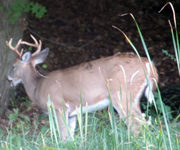
It’s clear now the snake simply lacks the strength to writhe free. After repositioning, the heron squeezes the snake right behind its head. After repeated attempts to chomp down directly on the snake’s head, the heron suddenly throws the snake down on the ground, jumps backward, and kicks her legs to break free of the coils, once and for all.

She backs up, observes the slowly convulsing snake for 20 seconds, pecks at it a few times, then picks it up, chomps down a few times hard on its head, and throws it in the air like a cowgirl tossing up a lasso. As the snake comes down head first in a vertical line, the heron opens her beak, tilts her head back, and catches the snake as it passes directly into her elongated neck. The first nine inches disappear.

The heron’s neck distends as she repeatedly forces the snake along a few inches at a time. Eventually, all that remains is the curling end of the snake’s tail. It hangs there for several discomforting minutes, like a demon’s tongue, until she says, “Let’s finish this,” and then the tail disappears too.

The heron moves unsteadily like a drunk who has overdone it this time. She looks ready to topple over from the ordeal. For several minutes, she stands on the banks motionless. She then strides into shallow waters and continues standing still with her neck in a distended S position.

Eventually, she bends, scoops up a beak full of water, throws her head back as if she were doing shots, and swallows hard. A chaser. Five times she repeats this action in slow motion, poco a poco, each time swallowing not quite as hard as the time before. It looks as if the heron’s having devoured the snake whole may yet prove a pyrrhic victory.

An hour later, as dusk approaches, the heron stands completely still in the canal’s deeper waters, surrounded by early fallen leaves. Her distended lower neck evidently still houses the snake. She seems content now. A small snake swims into the leafy undergrowth as the heron surveys her surroundings.

AQ19 – Animals

Connie Gutowsky – The Flare

The Flare
by Connie Gutowsky

When ankles feel a million bees
           stinging at once
 
She steps as though shackled
                 out of the shower, trying not to fall
 
When fingers can’t pour boiling water from a kettle
                     for the oolong tea
 
Can’t hold a pencil to write
                      or open the palette to paint
 
Can’t pull up the quilt
                        to cover bare shoulders in bed
 
Immobile, swollen, she rests with feet up, thinking about:
                            A bucket of bruised apples
                              The salt of marriage long after the wedding
                                Bridges corroding in silence
                                  The frightened eyes of migrating kids
                                    Centuries of tribal mayhem
                                      A scrappy woman shuffling her cart
                                                                                        full of discarded whatnots.

Jane Blanchard – More than Myth

More than Myth
by Jane Blanchard

For every Hydra head lopped off
      At least two more have grown:

This Herculean task requires
      A sword, a flame, a stone.

A heel can crush the crab latched to
      One toe in some lame game:

Another constellation forms
      With Cancer as its name.

Bryan R. Monte – AQ18 Spring 2017 Art Review

AQ18 Spring 2017 Art Review
by Bryan R. Monte

Ed van der Elksen – Camera in Love/De Verliefde Camera, Amsterdam Stedelijk Museum

At the Amsterdam Stedelijk Museum, one can currently view the one of largest retrospectives of photographer and filmmaker Ed van der Elsken’s work in 25 years. The exhibition entitled: Ed van der Elksen – Camera in Love/De Verliefde Camera is open until 28 May 2017.

Van Der Elksen (1925-1990) photographed the cityscapes and people of Paris (in the 1950s), Amsterdam (in the ’50s, ’60s and ’70s), and Hong Kong and Tokyo (in ’60s and ’70s). He also went off to Africa and around the world by boat to photograph people in remote and less Western locations in the late 1950s. The Stedelijk, which has the largest collection of Van Der Elksen’s work, has assembled a very comprehensive, longitudinal exhibition of both his photos and films and presented them in a very aesthetically sensitive, yet educational manner.

Museum director, Beatrix Ruf said at the press conference that Van Der Elsken was a Dutch photographer who “experimented with photos and film in ways that capture the moment, that tell stories in ways that are really intense.” For example, Van Der Elksen’s Paris photos of the 1950s have a very dark and grainy quality that Elsken used to show the gritty quality of its post-WWII café society. Van Der Elsken studied sculpture in the Netherlands in the 1940s and these sharp, sculptural edges can be seen in his black and white photos from the ’50s. He also, like Weegee, was fascinated by crime in the big city and the exhibition includes photos of two French gendarmes taking a man away, their arms under his shoulders, as well as a full-length, group portrait of Japanese Yakuza reminiscent of some of the guild and schutters portraits in the Rijksmuseum and Haarlem’s Franz Hals Museum.

The exhibition is divided physically into two sections: an inner ring and an outer ring. The inner ring has 200 of Van Der Elsken’s photographs hung on white walls. It includes photos from the 1950s to the 1980s in black and white and colour and displays Van Der Elksen’s various photographic techniques and changing subject matter—from cityscapes and people to concentrating more on the urban personalities in his later work. The darker outer ring includes about a dozen films, some slides and many contact sheets, notes on how he would crop or expose his shots, as well as historical and biographical information. One short film records what was left of the Jewish ghetto in the 1950s. When I first came to the Netherlands, I asked what had happened to the Jewish Quarter and I was told by more than one person most of it had fallen in due to the construction of the underground Metro line (which was opposed with much protest in the late ’60s/early ’70s as is memorialised on the walls of the Nieuwmarkt station, near the centre of the former Jewish neighbourhood). This, however, is clearly not true according to Van Der Elsken’s film with the subtitle “Demolition Jewish Quarter.” It shows the neighbourhood with many overgrown, vacant lots, but also with some derelict or abandoned buildings with boarded up windows still standing, one of which is being scavenged for wooden beams.

This section also includes a variety of photos, short films and a slide show from the ’50s, ’60s and ’70s. The earliest film is about Van Der Elksen’s sponsored world journey and in one scene, shows his cabin hung with rolls of developed film. Another staged scene shows two lovers in a convertible automobile being awakened by cows in a field. There is a set of photos from Central Africa from 1957-58 featuring people in traditional dress and face paint performing rituals, and hunting. “Eye Love You,” also the name of Van Der Elsken’s first, colour photobook from 1977, includes, according to the museum,: “hippies, nude beaches, couples having sex, and Indian transvestites” contrasted with “the poor and their struggle for survival.” “Tokyo Symphony,” is an unfinished project, due to Van Der Elksen’s illness, about that city including slides of the fishmarket, a religious ceremony, demonstrations, and as usual, Van Der Elsken’s regulars—the beautiful and the fringe and alternative types. One of the most interesting presentations of Van Der Elsken’s work in this dark ring is the projection of four films simultaneously on the four sides of a cube, each of which can be enjoyed separately or two simultaneously.

Van Der Elksen records Amsterdam in all its iconic glory including an auto being fished out of a canal, people dancing in a cafe to a live band, prostitutes in the red light district, mini-skirted women in high heels crossing the Dam, punks with spiky hair and safety pins through their ears, young men and women in designer clothes sitting outside at a cafe, emaciated junkies, and the obligatory hippie birth and sex videos of that era. Many of the photos and films of this period were captured by Van Der Elsken as he roamed the city centre in his specially-designed open car with rollbars to steady his camera, as if he were a naturalist filmmaker in a Range Rover capturing wildlife on the Serengeti’s plains. Ed van der Elksen – Camera in Love/De Verliefde Camera is an exhibit one won’t want to miss if you want to learn more about this Dutch photographer and filmmaker and, of course, about Amsterdam.

Bryan R. Monte – AQ18 Spring 2017 Book Reviews

AQ18 Spring 2017 Book Reviews
by Bryan R. Monte

Jacob M. Appel. The Mask of Sanity. The Permanent Press. ISBN 978-1-57962-495-8, 256 pages.
Jacob M. Appel. The Topless Widow of Herkimer Street. Stories. Howling Bird Press. ISBN 978-0-9961952-1-8, 181 pages.
Lou Gaglia. Sure Things & Last Chances. Spring to Mountain Press. ISBN 978-0-9863490-4-1, 194 pages.

In this issue I continue to review authors published by non-traditional or indie presses who I believe offer more than what the big-five have served up on their spring reading lists. I feel that these three books of indie fiction offer stories that are quirky, yet human; comic, yet profound; fantastic yet realistic. Their authors, though occupying different points of the social spectrum, come to some of the same conclusions about the human spirit groping its way towards safety, love and recognition.

The first book is The Mask of Sanity by Jacob M. Appel, who is interviewed in depth in this issue. This book is about Dr. Jeremy Balint who becomes a sociopathic serial killer (the reader initially thinks) in order to cover the final murder of his wife, whom he discovers one day, by accident, and unobserved in flagrante delicto with a hospital colleague. On the surface, Dr. Balint looks like a devoted husband, father and physician who appears to be moving up the ladder at the hospital where he works due to his expertise, ambition and a bit of luck. Unfortunately as readers discover, this is not the case. Positions and awards become sometimes ironically available to him due to his cunning, envy and willingness to do anything, even kill strangers, to achieve his endgame.

The characterisation in The Mask of Sanity is excellent; each character has a distinct and believable voice and behaviour. In addition, Balint’s homicidal plans mesh like the gears of a clock until someone leaves the front and back doors of his house open and a neighbourhood toddler wanders in and into the family pool where it drowns. This ultimately leads to the suicide of one of its grief-stricken parents, which could unwittingly unmask Dr. Balint’s murder spree. The Mask of Sanity is full of surprises and will keep the reader wondering if Balint will be caught all the way to the very end of the story.

Appel’s second book, The Topless Widow of Herkimer Street. Stories. won the 2016 Howling Bird Press Fiction Award, one of the many fiction awards Appel has been awarded over the past decade. Each of these stories are peopled by a different cast of characters: an elderly couple who discover their prefab retirement home has been delivered to the wrong address; a group of older, suburban women who organise a topless, backyard protest, a dying man who wonders to whom he should his stockpile of antique iron lungs, a starving, middle-age actress who’s trolled by good reviews by a man she rejected for a date in high school; a couple who grapple with pulling the life support plug on their teenage daughter who was bullied into committing suicide. These stories have different characters and settings but all revolve around the issues of bioethics, quality of life, challenging conventional notions and how love, no matter how quirky, can sometimes provide comfort in an uncertain and difficult world. Thematically these stories are deep whilst, at the same time, they are also entertaining. If they don’t move you, challenge your perspective or occasionally make you laugh, then perhaps you should seek professional help.

Lou Gaglia’s Sure Things & Last Chances is a darkly humorous collection of short fiction. Many of its stories are set also in New York, although his characters are working and middle-class bridge and tunnel residents rather than Appel’s Manhattan doctors, psychologists and other urban professionals. A theme similar to both writers, however, is looking for love, although many of Gaglia’s characters are unwilling or unable to take chances, or if they do, find themselves in less than ideal relationships. Some have been abused or bullied as Greg in “Networking” who as a teen was hung over a railing by a boy’s father for tackling his son. Others such as the narrator of “Penance” take out their aggression on competitors by killing ants and then going to confession. Others such as the “Lost in the Woods” protagonist, stumble from one romantic mishap to another. “The Listeners” is a story of two different men’s break ups with women overheard by the narrator in a library. The first, remembered from years ago, was due to a difference in religion. The second is related in the present and due to a girlfriend related her near-death experience to an unbelieving, superficial boyfriend. The narrator in his mind tries to comfort the second woman, even though she’s not there, just part of an unfortunate story: Where did you go? What did you see when you died? I’ll listen. I will., the main character says to himself on his way out of the library. In other stories such as “Almost Like Steve McQueen” Gaglia’s protagonists try to summon false courage to go to the dentist. “Winging It” depict son’s and grandson’s desires not to be like their fathers, the grandson not wanting to be pegged in any profession, versus his father’s desire for the stability of a nine-to-five job after his own father had had so many jobs, his mother “couldn’t name them all in one day.” This typifies the swing of the occupational pendulum over the generations—one generation choosing adventure with risk and the next, security and boredom, after the unstable childhood caused by an adventurous father.

What I find most pleasing in his fiction is that sometimes Gaglia’s stories are also a continuation of an earlier narrative. The shy, 30-something introverted Greg in “Networking” returns years earlier as a physically-abused teenager in “Butch.” This gives Gaglia’s fiction an interesting continuity that is also found in his story “Hunger” when his protagonist thinks later about the Italian waitress, Jeanette, who was kind to him after he was beaten up in “Letters from a Young Poet” in Gaglia’s previous collection, Poor Advice. In fact, there’s quite a lot of working and middle-class, school-of-hard-knocks violence and cruelty in Gaglia’s stories. The kind I remember from my neighbourhood where parents physically “disciplined” their children with belts and boards, and the neighbourhood bullies chased and assaulted anyone weaker or smaller whilst their parents turned a blind eye. Violence was also a part of sports that were played in my neighbourhood, mostly football, baseball and hockey, these matches ending usually when someone was injured. (My reprieve from grammar school football came when my front teeth got chipped and my parents imagined the impending financial pain of future dental bills). It’s the realism of these stories, with their everyman protagonists trying to make sense out of a violent and abusive world and how it arrests their development later in life, which makes these stories all the more compelling.

John C. Mannone – The Sunburning

The Sunburning
by John C. Mannone

I studied the sunspot-mole on her bronzed face
for years tempered with copper-toned sun. Then,
her flesh, supple, malleable, stretched on a bed

of sand filling the curve of spine, packing under
knees and neck—her gold-tinted body lifted up
as an offering to the sun god; sacrificed herself

and our children, too, to this Molech. Each year
we’d mecca to the beach, molt skin to him
over & over on this altar. We closed our eyes

to the retina-searing heat, and let the sun
send hot kisses caressing every exposed
offering of flesh. Let the cool offshore breezes

soothe the hotness, whisper lies. We’d fall asleep
to the lullaby of a swishing surf, to the feel
of white sand between our fingers. But I woke up

under a xenon glare, clenching white linen sheets
drenched in cold sweat. A hospital room fan blowing
whispers, telling me that her black, irregular sunspot

had flared, and was gone. She was gone. I too
on fire, another sacrifice.